
Why a $25,000 cash system can become a $40,000 loan, how dealer fees work, and what the 30% federal tax credit actually covers.
Looking for verified solar-installation specialists? Check availability in seconds.
Check ZIP code availabilityThe gross cost vs. net cost calculation
Solar pricing in marketing materials almost always leads with the 'net cost after incentives.' That number assumes you qualify for the federal Section 25D Residential Clean Energy Credit (currently 30% of total installed equipment and labor costs) and any state or local utility rebates.
However, the installer requires payment for the full gross cash price upon completion. The 30% federal tax credit is a non-refundable tax credit claimed on IRS Form 5695 when you file your annual taxes — it is not a direct discount on the invoice or an instant check at installation. If your tax liability is lower than the credit amount, the remaining credit rolls forward to future tax years.
Comparing the four payment options
How you finance solar often impacts your return on investment more than the hardware efficiency rating.
The metric that matters: Price per Watt ($/W)
Because system sizes differ based on household energy consumption and roof layout, comparing total quote amounts directly is misleading. The industry benchmark for true price comparison is gross cash price divided by total DC wattage.
For example, a $22,000 cash quote for an 8 kW (8,000 watt) system equals $2.75 per watt ($22,000 ÷ 8,000W). Most standard residential rooftop installations across the U.S. land between $2.50 and $3.50 per watt before incentives. Bids above $3.75/W should reflect premium microinverters, battery storage, or complex roof structural and electrical panel upgrades.
Net metering policies and battery storage economics
Under traditional Net Energy Metering (NEM 1.0/2.0), surplus electricity generated during sunny daytime hours is credited by your utility at full retail rates, acting as a free grid battery. In these markets, standalone solar panels without a battery deliver the fastest financial payback (typically 6 to 9 years).
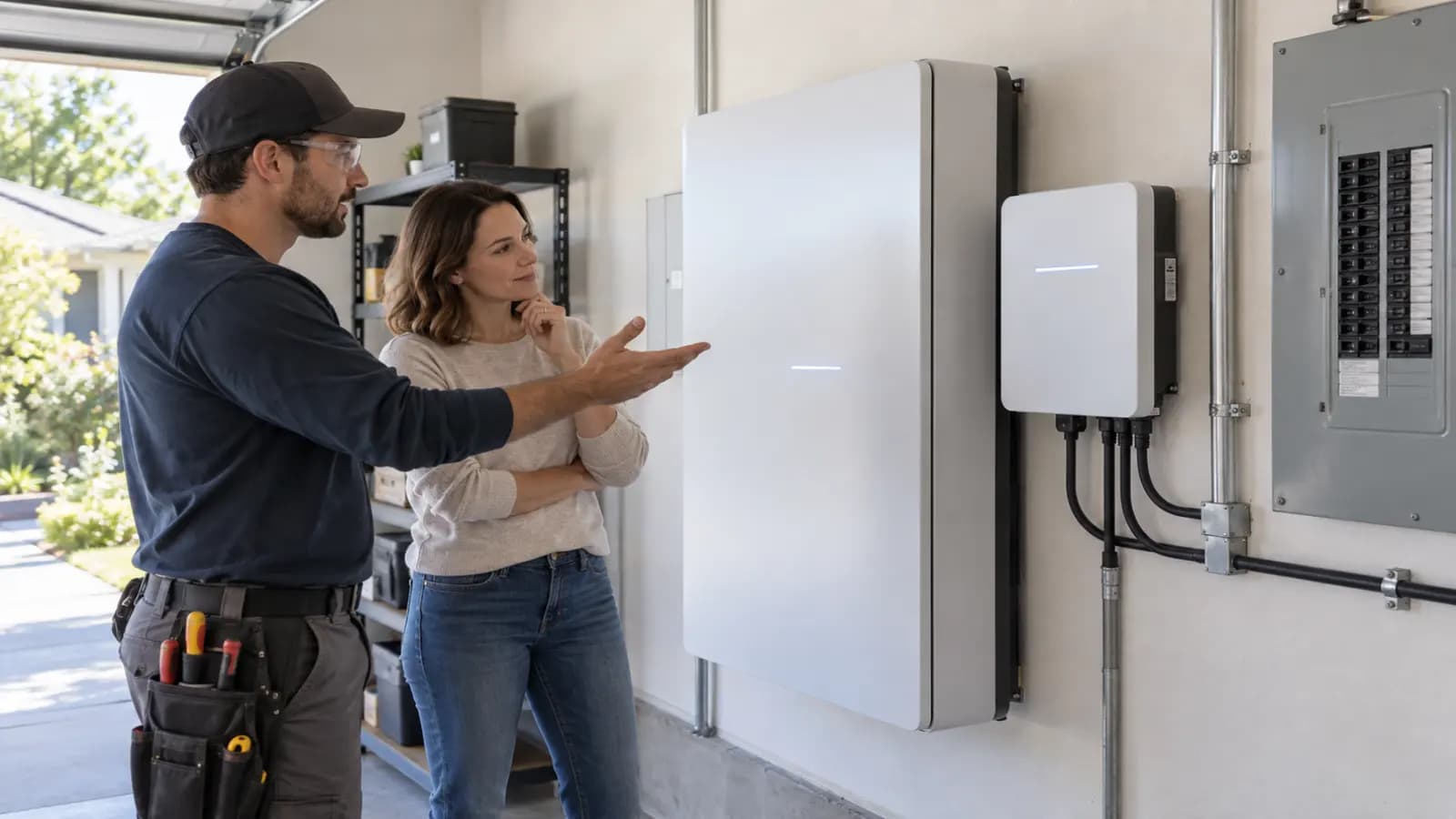
Under newer Net Billing Tariffs (such as California's NEM 3.0), utilities credit exported power at reduced avoided-cost rates (often 70%–80% lower than retail). In net-billing jurisdictions, adding a 10–15 kWh battery storage system ($9,000–$15,000 installed) allows you to store excess daytime generation for evening home use, preserving your solar savings.
Five financial questions to ask before signing
Require clear written answers to each of these items in every proposal before committing to a contract.
What is the total cash price of the system before any financing fees or interest are applied?
If a loan is proposed, what is the exact dealer fee or finance origination surcharge added to the principal?
What annual utility rate inflation percentage did you use in your 25-year savings projection (insist on 3% or lower rather than aggressive 7%–9% models)?
If choosing a lease or PPA, what is the exact transfer requirement and buyout schedule if I sell my home?
Are all utility interconnection fees, permit costs, and required electrical main service panel upgrades included in this quote?
Frequently asked questions
How does the 30% federal solar tax credit work?
The federal Residential Clean Energy Credit allows homeowners to deduct 30% of total solar installation and battery storage costs from their federal tax liability. It is claimed on IRS Form 5695 for the tax year the system is placed in service.
Is buying solar with cash better than a solar lease?
Cash or a standard credit union loan offers significantly higher lifetime savings and avoids third-party UCC-1 lien filings on your roof that can complicate real estate sales. Leases provide zero upfront cost but surrender the 30% tax credit to the leasing company.
What is a good price per watt for residential solar?
Most quality residential rooftop installations range from $2.50 to $3.50 per watt (cash price before incentives). Anything over $3.75/W for standard panels without batteries is generally overpriced.
Cost ranges here are general research estimates compiled from national and regional data. They are not quotes, offers or price guarantees — only a licensed provider who has seen the job can price it. GetLocalExperts is a free matching service and does not perform home services.
This guide was researched and reviewed by the GetLocalExperts Editorial Team against primary regulatory benchmarks, state contractor licensing board standards, and FTC consumer protection guidelines.