Plan a 2026 roof budget by material and roof size, then account for tear-off, damaged decking, flashing, ventilation, permits, steep slopes, and finish details.
Looking for verified roofing specialists? Check availability in seconds.
Check ZIP code availability2026 roof replacement cost at a glance
For early budgeting, an installed asphalt-shingle replacement often falls around $350–$700 per roofing square, or $3.50–$7 per square foot of actual roof surface. Standing-seam steel commonly begins around $1,000 per square and can exceed $1,600; tile, slate, copper, complex roofs, and high-cost markets can run substantially higher. These are broad national research ranges for professional replacement—not contractor quotes or promises.
A roofing square equals 100 square feet of roof surface. It does not mean 100 square feet of living area. A home with a 2,000-square-foot footprint has a larger roof once slope and overhangs are included, while a two-story 2,000-square-foot home may have a much smaller footprint. A roof measurement report or contractor takeoff is the right starting quantity.
The final number combines material system, measured roof area, waste, tear-off, labor, access, pitch, stories, penetrations, flashing, ventilation, permits, disposal, and concealed repairs. Compare the full assembly and scope before comparing totals.
Installed roof replacement cost by material
Use the following 2026 planning bands per roofing square. They synthesize current national consumer cost data and assume professional installation, but individual sources define project size and inclusions differently. Local bids may land outside these ranges, especially for small jobs, complex architecture, specialty metals, historic work, or storm-driven demand.
A 2,000-square-foot roof cost example
Suppose a contractor measures 2,000 square feet of roof surface, or 20 squares. At $400–$700 per square, the preliminary architectural-asphalt range is $8,000–$14,000. At $1,000–$1,600 per square, a standing-seam steel planning range is $20,000–$32,000. Those multiplications are useful only if the per-square number covers the same scope.
Waste is not automatically another billable 10% added to a quote. The contractor should calculate ordering waste for hips, valleys, rakes, starter, and cuts, then state the measured squares and ordered quantity. A simple gable may need less waste than a cut-up roof with several valleys and dormers.
Now test the example against exclusions. If tear-off, disposal, permit, flashing, ventilation, and normal accessories are already included, the range is meaningful. If they are excluded—or if the deck needs extensive replacement—the contract price can move materially.
What changes the cost besides material
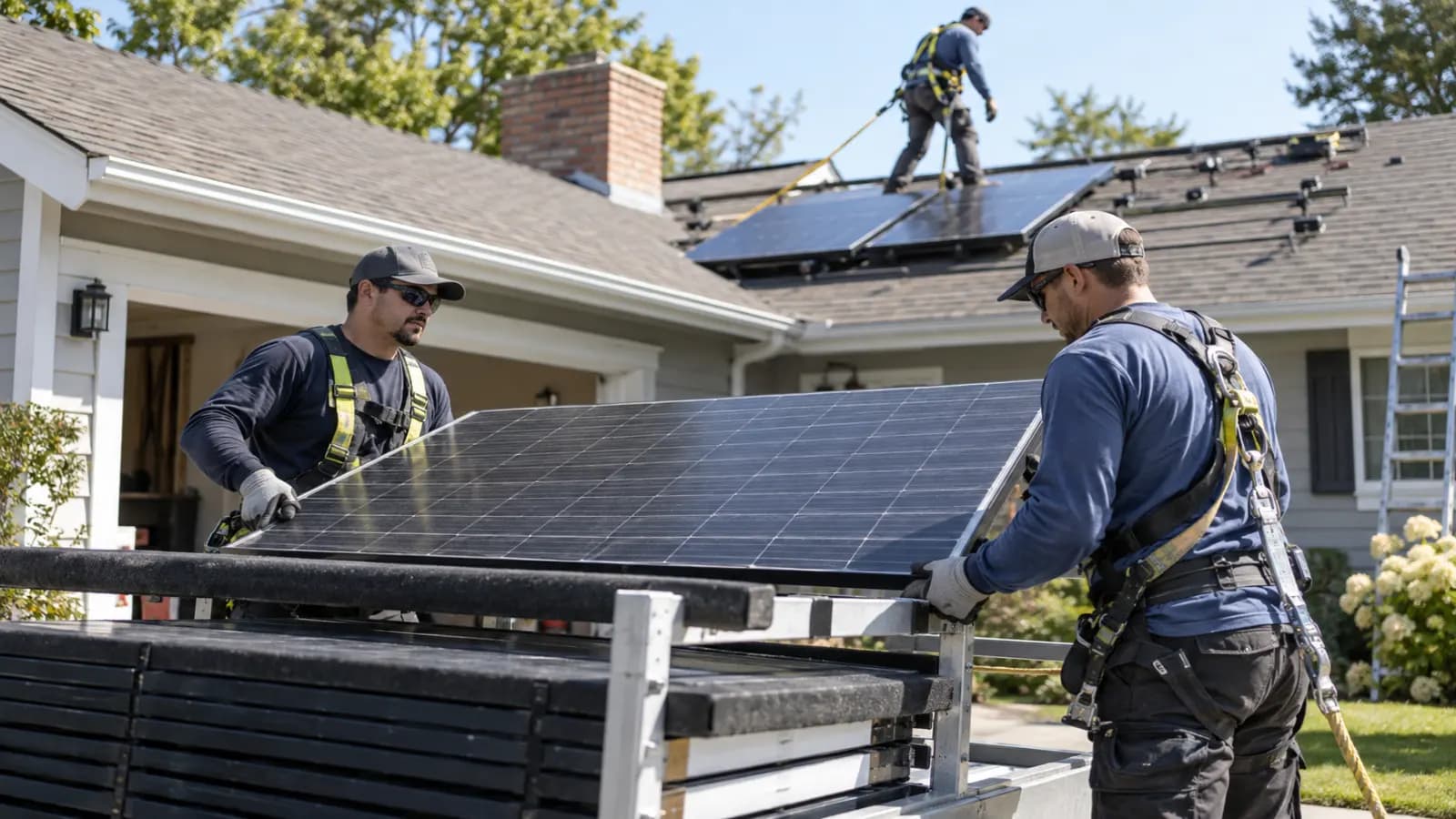
Material is visible, but labor and detailing often explain the gap between bids. A low, walkable gable roof with driveway access is a different production job from a three-story roof with a 12:12 pitch, tight property lines, six valleys, solar panels, and masonry chimneys.
Tear-off, decking, and the change-order allowance
The old roofing usually hides some or all of the deck, so no estimator can promise its condition from the ground. The proposal should include a unit price for replacement sheathing by sheet or square foot, identify sheathing thickness and type, and require photographs or your approval before work exceeds a stated allowance. Rotten framing is a separate scope from deck sheathing and may require another trade or design professional.
Ask how many existing layers the base bid removes and whether underlayment, nails, flashings, and edge metals are included in tear-off. Overlay rules vary by jurisdiction and roof system. Even where an overlay is legally possible, it limits deck inspection and can conflict with product instructions, weight limits, insurance requirements, or the desired service life.
A defensible change order shows the condition, quantity, unit price, and effect on schedule. “Wood as needed at market price” is not enough information for a major replacement.
Choose a roof system, not just a surface material
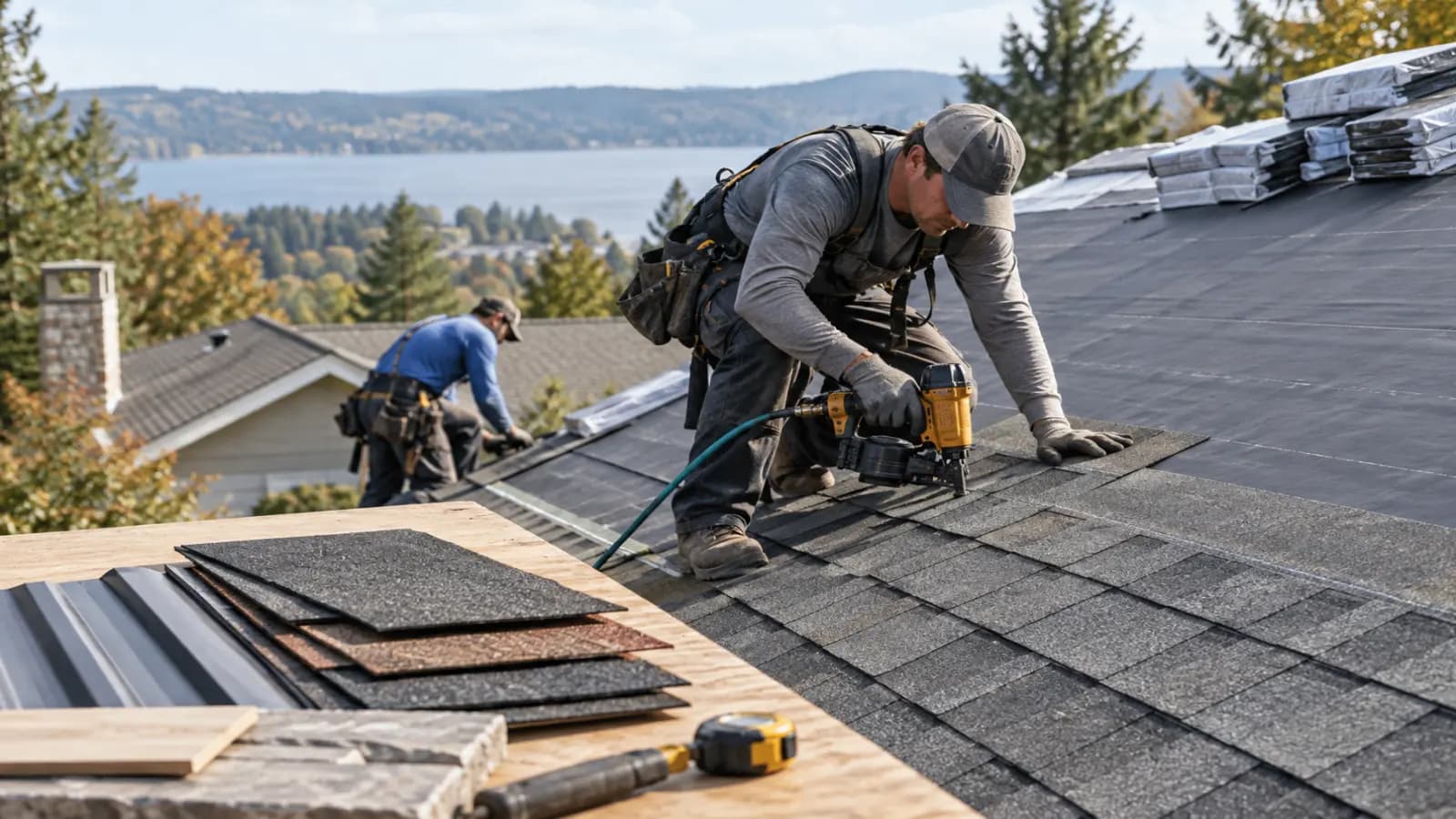
Shingles, panels, tile, or slate are the weathering surface. Water management also depends on the deck, underlayment, eave and valley protection, drip edge, step and counterflashing, penetration flashings, fasteners, ventilation, and transitions to walls. The Department of Energy’s Building Science Education materials identify valleys, wall intersections, and penetrations as vulnerable areas and describe layered membranes and metal flashing as part of a water-managed assembly.
For asphalt, request the manufacturer, exact shingle line, starter, hip-and-ridge product, underlayment, ice-barrier locations, and ventilation plan. For standing seam, request metal type and thickness, paint or coating system, seam profile, clip or fastening method, panel fabrication details, underlayment, snow retention where relevant, and treatment of penetrations. “Metal roof” alone does not define a comparable system.
Tile and slate may require evaluation of structural capacity, attachment, underlayment, flashing, and replacement access. Synthetic products vary widely; review testing, code evaluation reports, installer requirements, and actual warranty exclusions rather than choosing only by appearance.
Asphalt versus metal: when the premium may make sense
Architectural asphalt usually wins on upfront price, installer availability, repair familiarity, and compatibility with many existing homes. Standing-seam metal may appeal when the homeowner expects to stay long-term, wants fewer tear-off cycles, values a particular design or fire performance, or needs a system suited to local rain, snow, and wind conditions. The exact outcome depends on the product and installation—not the material label alone.
Do not assume every metal roof is automatically a cool roof or that it will produce a fixed energy saving. The Department of Energy says solar reflectance, retention of reflectance, and thermal emittance matter, and that climate, insulation, HVAC efficiency, and roof construction affect savings. Compare rated products and local energy modeling if cooling performance is part of the purchase decision.
A simple ownership comparison divides each complete installed proposal by the years you realistically expect to own the home, then adds likely maintenance, repair, financing, and future tear-off costs. It is a planning exercise, not a guaranteed lifespan calculation.
Permits, codes, insurance, and warranties
Reroofing permit and code requirements are local and may depend on material, roof slope, location, number of layers, deck condition, wind zone, wildfire exposure, or whether structural work is involved. Ask who obtains the permit, whose name appears on it, which inspections are required, and who closes it. Confirm conflicting answers with the local building department.
Homeowners insurance generally is not a maintenance plan. Whether a policy pays for roof work depends on the covered cause of loss, policy language, deductible, roof settlement basis, exclusions, and documentation. Do not describe age-related replacement as storm damage, and do not let a contractor promise claim approval. Contact the insurer promptly after a genuine covered event and protect the property from further damage when safe.
Separate the contractor’s workmanship warranty from the manufacturer’s material or system warranty. Ask what registration and accessory requirements apply, who handles a leak investigation, which labor and disposal costs are excluded, whether coverage is prorated, and whether it transfers. Keep the contract, paid invoice, permit closeout, inspection record, product labels, photographs, and warranty confirmation together.
How to compare roof replacement quotes line by line
Request at least two or three written estimates for a planned replacement. The Federal Trade Commission recommends multiple estimates and says a written estimate should describe the work, materials, completion date, and price. Do not automatically select the lowest total; first normalize the scope.
Measured roof area, waste factor, pitch, stories, and number of existing layers
Manufacturer, product line, color, rating, and every required system accessory
Tear-off, property protection, haul-away, dump fees, cleanup, and magnetic nail sweep
Deck inspection process, included allowance, and unit prices for sheathing and framing repairs
Underlayment, eave and valley membrane, drip edge, flashing, fasteners, and ventilation design
Treatment of skylights, chimneys, walls, gutters, solar, antennas, and every penetration
Permit, code upgrades, inspections, start window, weather plan, and completion definition
Legal business identity, applicable credential, insurance, employees or subcontractors, and payment milestones
Manufacturer warranty and contractor workmanship warranty stated separately
Repair or replace the roof?
There is no reliable rule that a roof must be replaced at a certain percentage of its advertised life. A localized flashing failure, isolated wind damage, or limited repairable defect may justify repair when the surrounding system remains serviceable and compatible materials are available. Widespread deterioration, repeated leaks from unrelated areas, brittle or unrepairable materials, extensive deck damage, or a repair cost that does not meaningfully extend service life can favor replacement.
Ask the inspector to provide overview and close-up photographs, moisture or attic findings when relevant, and separate repair and replacement scopes. If insurance may be involved, preserve evidence and follow the carrier’s reporting process before destructive work beyond emergency mitigation.
The bottom line
Start a roof replacement budget with measured roof surface and an installed material range, then price the assembly and site conditions. The most useful quote is not the one with the fewest line items; it is the one that makes tear-off, hidden wood, flashing, ventilation, permits, cleanup, warranties, and change orders predictable.
If you are ready to compare roof replacement options, submit your ZIP code and project details to request a free match with independent local roofers. Verify credentials, insurance, references, and the written scope before hiring; there is no obligation to select a matched provider.
Frequently asked questions
How much does a new roof cost in 2026?
For preliminary planning, installed asphalt replacement often runs about $350–$700 per roofing square, while standing-seam steel commonly runs about $1,000–$1,600 per square. Tile, slate, specialty metal, complex roofs, and high-cost markets may be higher. Multiply by measured roof squares, then confirm tear-off, decking, flashing, ventilation, permits, and disposal with local written bids.
How many roofing squares is a 2,000-square-foot house?
Living area does not determine roof squares. A roofing square is 100 square feet of actual roof surface, and the result depends on footprint, stories, slope, overhangs, and attached structures. Obtain a roof measurement report or contractor takeoff rather than assuming a 2,000-square-foot home has a 20-square roof.
Is a metal roof worth the extra cost?
It can be for a long-term owner who values the chosen system’s durability, design, fire or weather characteristics, and fewer replacement cycles. Compare complete installed systems, local climate, maintenance, repair access, financing, expected ownership period, and rated energy properties. Metal does not guarantee a fixed lifespan or energy saving.
What hidden costs appear during roof replacement?
Common additions include concealed deck or framing damage, extra tear-off layers, code-required upgrades, difficult flashing, skylight work, structural reinforcement, solar removal and reset, and scope changes around gutters or masonry. Require inspection evidence and written unit prices or change orders before work begins.
What should a roof replacement estimate include?
It should state measured area, material and system accessories, tear-off layers, deck-repair prices, flashing, ventilation, penetrations, property protection, disposal, permit responsibility, schedule, payment milestones, change-order rules, and separate manufacturer and workmanship warranties.
Cost ranges here are general research estimates compiled from national and regional data. They are not quotes, offers or price guarantees — only a licensed provider who has seen the job can price it. GetLocalExperts is a free matching service and does not perform home services.
Sources and further reading
- How Much Does Roof Replacement Cost? [2026] — Angi
- How Much Does Roof Replacement Cost? — HomeAdvisor
- 2026 Metal Roof vs. Shingles Cost Comparison Guide — Angi
- Water-Managed Roof Assembly — U.S. Department of Energy Building Science Education
- Purchasing Energy-Efficient Cool Roof Products — U.S. Department of Energy
- How To Avoid a Home Improvement Scam — Federal Trade Commission
This guide was researched and reviewed by the GetLocalExperts Editorial Team against primary regulatory benchmarks, state contractor licensing board standards, and FTC consumer protection guidelines.