
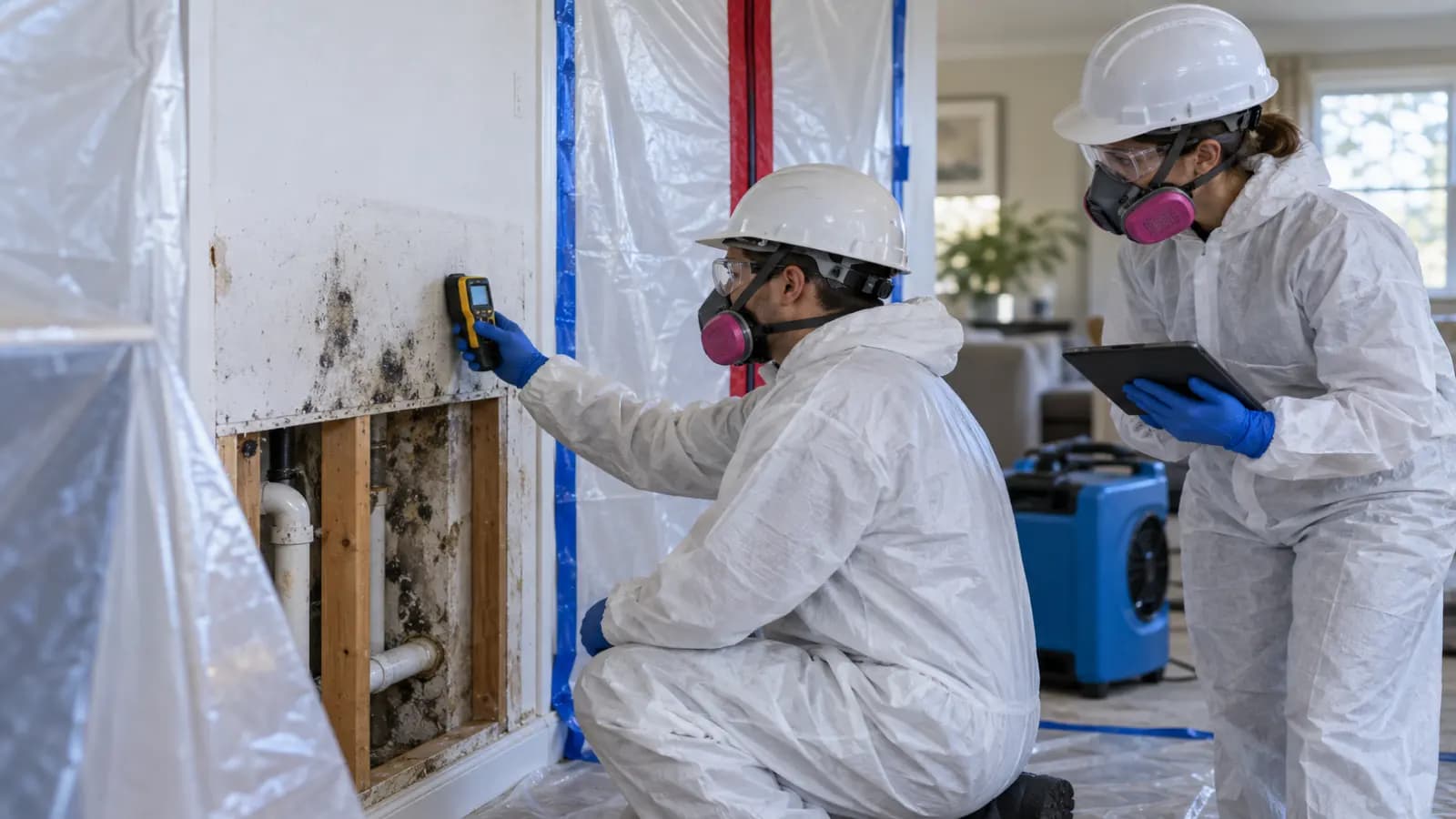
Stop the moisture source first, document affected materials and separate plumbing repair from drying and remediation. Fast action can limit damage without turning cleanup into unsafe demolition.
Looking for verified plumbing specialists? Check availability in seconds.
Check ZIP code availabilityFirst stop the water safely
Shut off the affected fixture or main water supply if you can reach it safely. Avoid wet electrical equipment, sagging ceilings and contaminated water. Call emergency services or the utility when electrical, gas or structural hazards are present.
A plumber repairs the source; a water-mitigation company extracts water and dries assemblies; a remediation professional addresses established contamination. One company may offer several services, but the scopes should remain clear.
Why the first 24–48 hours matter
EPA advises drying wet materials as quickly as possible, generally within 24–48 hours. That is a response target, not a promise that mold cannot exist sooner or that every wet material can be saved.
Record moisture locations, photographs, shutoff time and professional readings. Do not paint or close walls until the source is fixed and drying is documented.
Clean water is different from sewage
A supply-line leak starts differently from a toilet overflow, sewer backup or flood. Contaminated water can carry pathogens and chemicals and may require disposal of porous materials and specialized protective procedures.
Keep children, older adults, people with respiratory conditions and immunocompromised occupants away from moldy or contaminated cleanup areas.
When professional help is appropriate
Large areas, repeated growth, hidden cavities, HVAC involvement, sewage, hazardous building materials or persistent health symptoms justify professional evaluation.
Medical symptoms belong with a healthcare professional. A visual or air test does not replace fixing the moisture source.
- Active leak or uncertain shutoff: plumber.
- Standing water and wet assemblies: mitigation provider.
- Established or widespread mold: qualified remediation provider.
- Damaged wiring: licensed electrician.
- Coverage questions: insurer or adjuster.
What a cleanup scope should document
Ask for boundaries, methods and completion criteria in writing.
Water source and contamination category.
Affected rooms and materials.
Moisture readings and drying equipment.
Containment and HVAC precautions.
Materials cleaned, removed or retained.
Post-work moisture condition and reconstruction exclusions.
The bottom line
Fix the water source, control immediate hazards, begin documented drying and use specialized help when contamination or scope exceeds safe household cleanup.
GetLocalExperts can request a plumbing match but does not perform remediation or provide medical advice.
Frequently asked questions
Does every leak cause mold?
No, but persistent moisture increases risk. Prompt source repair and drying are the priorities.
Can I paint over mold?
Paint does not correct moisture or contaminated material. Resolve the source and follow an appropriate cleanup plan first.
Should I run fans after a sewage backup?
Do not spread contaminated air into clean areas. Follow professional guidance for containment, ventilation and HVAC use.
Does bleach solve mold inside drywall?
Porous materials and hidden cavities require material-specific decisions. Surface treatment alone may not address the source or full extent.
Will insurance cover mold cleanup?
Coverage depends on the policy and cause of water damage. Document conditions and contact the insurer promptly.
This is general safety information, not medical advice or a remediation protocol. Conditions involving sewage, hazardous materials, structural damage or vulnerable occupants may require specialized help.
Sources and further reading
- Text Version of the Flooded Home — U.S. Environmental Protection Agency
- Water Damage Table: Mold Prevention — U.S. Environmental Protection Agency
This guide was researched and reviewed by the GetLocalExperts Editorial Team against primary regulatory benchmarks, state contractor licensing board standards, and FTC consumer protection guidelines.