A useful accessibility remodel begins with the resident's mobility and daily routine, then coordinates structure, waterproofing, clearances, lighting and controls.
Looking for verified bathroom-remodeling specialists? Check availability in seconds.
Check ZIP code availabilityWhat an aging-in-place bathroom can cost
There is no single accessibility-remodel price. A targeted safety update with blocking, grab bars, lighting and non-slip improvements may cost a few thousand dollars. A tub-to-shower conversion commonly becomes a five-figure project, while moving walls or plumbing can reach the cost of a complete bathroom remodel.
Ask for an itemized scope rather than one accessibility package. Product cost may be modest compared with demolition, structural reinforcement, waterproofing, tile and plumbing.
Plan around the person and routine
HUD guidance emphasizes that modifications should follow the resident's goals and needs. An occupational therapist or qualified accessibility professional can help assess transfers, reach, balance, vision, caregiver space and future changes.
A feature that helps one person may obstruct another. Confirm dimensions and mock up reach locations before walls are closed.
Three practical scope levels
Use scope levels to compare bids without assuming every bathroom needs reconstruction.
- Safety refresh: secure grab-bar blocking, improved lighting, lever controls, non-slip surfaces and accessible storage.
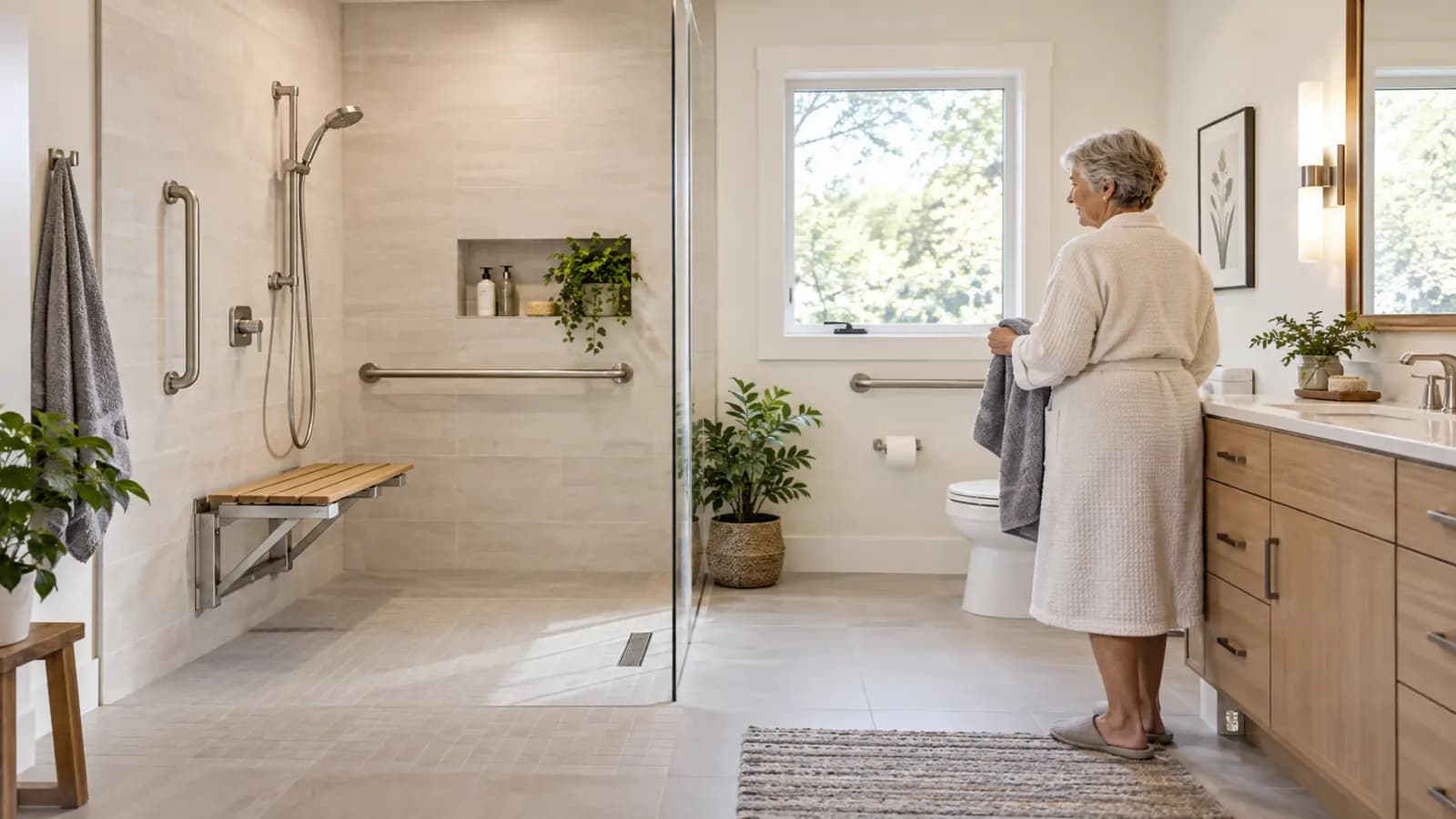
- Fixture conversion: low-threshold shower, seat, handheld shower, reinforced bars, comfort-height toilet and waterproofing.
- Layout remodel: wider clearances, door changes, plumbing relocation, roll-in shower or caregiver turning space.
Grab bars require structure
CDC fall-prevention materials recommend bathroom grab bars, but placement and attachment matter. Towel bars are not substitutes.
Before tile installation, document wall blocking or an approved anchoring system. Choose positions based on actual transfer movements, not symmetrical appearance.
Waterproofing, drainage and slip resistance
A low threshold changes floor slopes, drain details and waterproofing transitions. Require the contractor to identify the complete waterproofing system and flood-testing or inspection procedure where applicable.
Choose flooring by wet-use performance, maintenance and visual contrast. Extremely textured surfaces can be difficult to clean, while glossy surfaces may increase glare.
Quote checklist
The bid should connect safety goals to construction details.
Resident-specific goals and measured clearances.
Blocking and exact grab-bar locations.
Shower threshold, seat, controls and handheld fixture.
Waterproofing, drainage and ventilation system.
Lighting, switches, outlets and anti-scald controls.
Permit, inspection, demolition and finish restoration.
Future adaptability and product warranties.
The bottom line
Spend first on the features that support actual movement: secure handholds, clear paths, usable controls, lighting and a dry, durable shower assembly. Decorative upgrades should not consume the budget needed for safe structure.
Verify contractor qualifications and involve healthcare or accessibility professionals when individual mobility needs require it.
Frequently asked questions
Are grab bars only for older adults?
No. Secure support can help people with temporary injuries, disabilities, balance concerns and changing mobility.
Can grab bars be added without removing tile?
Sometimes, using suitable structure or approved anchoring. A professional should confirm the wall assembly and placement.
Is a walk-in tub better than a low-threshold shower?
It depends on transfers, waiting time, emergency exit, caregiver needs and maintenance. Evaluate the resident's routine before choosing.
Does Medicare pay for bathroom remodeling?
Coverage is limited and situation-specific. Ask the relevant plan or agency directly and do not assume a general remodel is covered.
Should an occupational therapist review the design?
An OT can be valuable when mobility, transfers, vision, cognition or caregiver assistance shape the layout.
This guide provides general planning information, not medical, occupational-therapy, accessibility-code or construction advice. Individual needs and local requirements vary.
Sources and further reading
- Check for Safety: A Home Fall Prevention Checklist — Centers for Disease Control and Prevention
- Home Modification Guide — U.S. Department of Housing and Urban Development
- About Vision Impairment and Falls Among Older Adults — Centers for Disease Control and Prevention
This guide was researched and reviewed by the GetLocalExperts Editorial Team against primary regulatory benchmarks, state contractor licensing board standards, and FTC consumer protection guidelines.